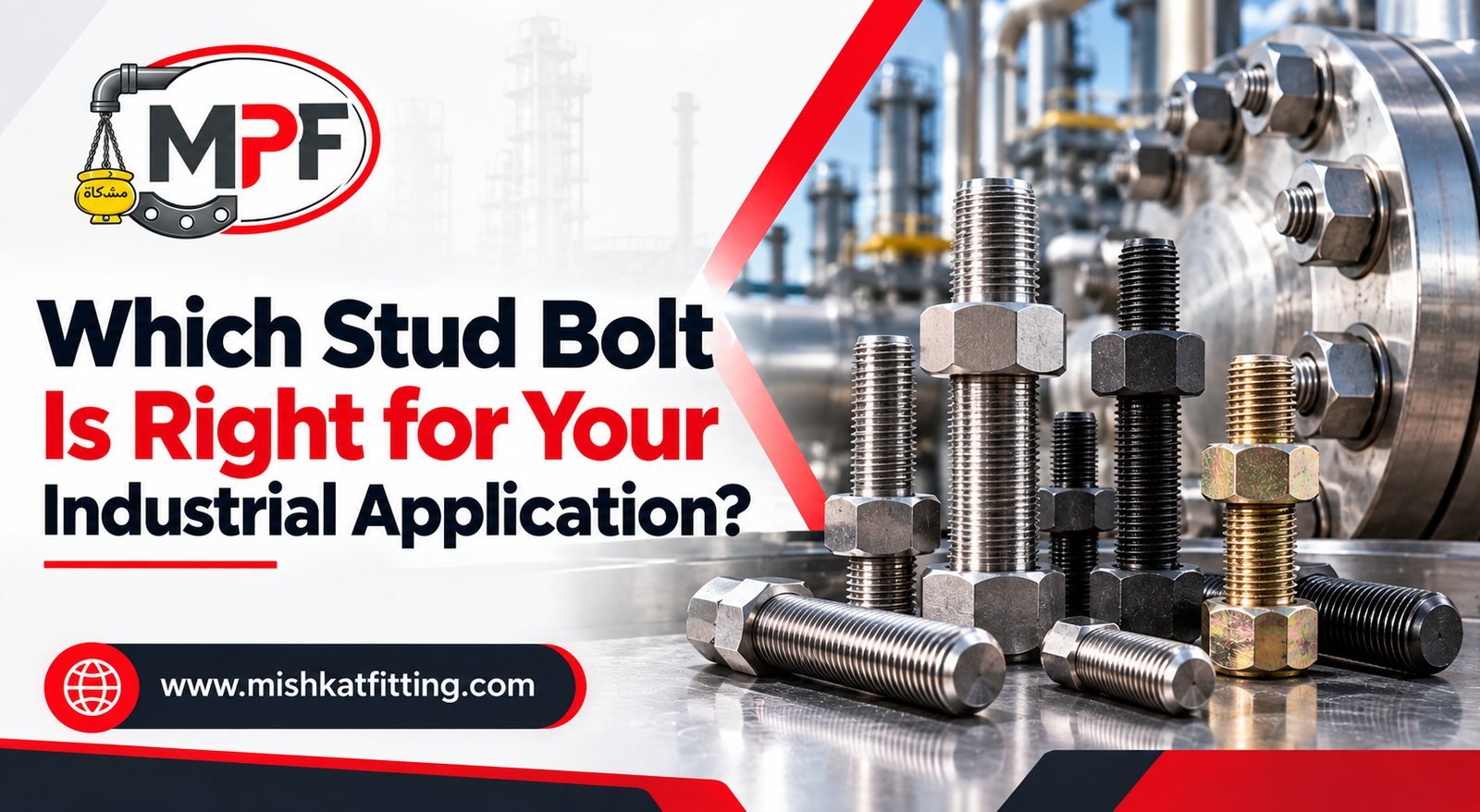
Industrial systems depend heavily on strong connections. A single leaking joint can cause costly downtime or safety risks. Fasteners keep these complex systems together under extreme conditions. Among all choices, stud bolts are the best option for high pressure and heavy loads. Choosing the right stud bolt requires knowing your system's stress, heat, and chemicals. Working with a trusted Stud Bolt Manufacturer Chennai like Mishkat Pipe Fittings helps you get exact parts for your needs. This guide explains stud bolt types, key selection factors, and material grades for every setup.
What Is a Stud Bolt?
A stud bolt is a threaded rod with no head. It uses two heavy hex nuts, one on each end. It holds together flanges, valves, tanks, and heavy machines.
Benefits Over Regular Hex Bolts
- Equal Tension: Tightening two nuts distributes force evenly across the flange face.
- Higher Strength: Stud bolts do not have head stress points like regular bolts.
- Easy Maintenance: You can remove nuts quickly without turning the inner stud body.
- Custom Lengths: Full-thread studs can be cut to fit thick flanges easily.
Main Types of Stud Bolts
Engineers select three main stud bolt styles based on the joint type:
- Continuous Thread Stud Bolts: Fully threaded from end to end. These are the most popular studs for pipe flanges in refineries.
- Double-End Stud Bolts: These have threads on both ends with a smooth middle section. They work well in heavy equipment frames.
- Tap-End Stud Bolts: One end has short threads that lock into a tapped hole. The other end takes a standard nut.
A certified Stud Bolt Manufacturer Chennai produces all three types to match strict ANSI and DIN standards.
Key Factors for Choosing Stud Bolts
Matching bolt specs to your working environment prevents sudden joint failures. Keep these four factors in mind:
1. Working Heat
Extreme heat weakens metal over time. High-heat lines need tough alloy steel studs that resist stretching. Cryogenic plants need specialized steel that stays strong in deep freeze conditions.
2. System Pressure
Flange joints under heavy pressure need high tensile strength to hold tight seals. Low-grade bolts can stretch and leak under load. An experienced Industrial Stud Bolt Manufacturer helps you match bolt grades to pressure ratings.
3. Rust and Chemical Risk
Saltwater, acids, and gas vapors rust untreated steel fast. Choosing the right steel grade or protective coating keeps bolts working longer.
4. Thread Sizes and Pitch
Studs must meet strict standards like ASME B18.31.2. Coarse threads work well for basic builds. 8-Thread series (8UN) studs work best for high-pressure pipe connections.
Comparing Stud Bolt Materials
Picking the right material grade stops joints from snapping or rusting out. Here is a breakdown of common ASTM grades:
| ASTM Grade | Material Type | Heat Range | Common Uses |
|---|---|---|---|
| ASTM A193 B7 | Alloy Steel | -29°C to 425°C | High-pressure pipes, oil valves, gas lines |
| ASTM A193 B16 | Alloy Steel | -29°C to 525°C | Steam lines, power plant boilers |
| ASTM A320 L7 | Low-Temp Alloy | Down to -101°C | Cold gas units, marine cold storage |
| ASTM A193 B8 | 304 Stainless Steel | -196°C to 800°C | Chemical plants, food lines |
| ASTM A193 B8M | 316 Stainless Steel | -196°C to 800°C | Marine rigs, harsh acid plants |
Alloy Steel Studs for Heavy Loads
Alloy studs like ASTM A193 B7 handle high stress and heat easily. Buying from a High Tensile Stud Bolt Manufacturer ensures heat treatment meets strict strength standards.
Stainless Steel Studs for Rust Defense
Stainless steel grades B8 and B8M offer top protection against rust and chemicals. Ordering from a Stainless Steel Stud Bolt Manufacturer Chennai guarantees precise threads and pure steel grades.
Protective Coatings
Adding a strong coating keeps studs safe from rough outdoor conditions:
- Hot-Dip Galvanizing: Thick zinc layer for outdoor structural frames.
- Zinc Plating: Thin coat that keeps thread movements smooth.
- PTFE Coating: Top chemical shield that makes nut removal smooth and easy.
- Xylan Coating: Great for ocean rigs because it resists salt spray rust.
Where Stud Bolts Are Used
Different plants use different stud setups to run safely:
- Oil Refineries: Use A193 B7 studs for high heat and heavy fuel pressure.
- Chemical Plants: Use A193 B8M stainless studs to stop acid rust.
- Shipbuilding: Uses marine-grade stainless studs to handle ocean salt.
- Building Sites: Uses thick foundation studs to anchor heavy steel columns.
A trusted Stud Bolt Supplier Chennai provides test reports with every order to prove metal quality.
Fastener Solutions by Mishkat Pipe Fittings
Mishkat Pipe Fittings (MPF) is a top Stud Bolt Manufacturer Chennai. MPF makes high-quality bolts, flanges, and fittings for industrial jobs. Operating an ISO 9001 plant in Chennai, MPF serves marine, fuel, and build sectors.
Why Choose MPF?
- Certified Quality: Products meet strict ANSI, ASME, and DIN standards.
- Tested Materials: MPF uses verified raw stock for full safety compliance.
- Global Delivery: Shipping to over 10 countries with complete mill test papers.
- Custom Designs: Fast production for both standard and special fastener orders.